Long-range UHF RFID sticker, 860–960 MHz, PET, Tag-U8-10040
GTIN: 5906935201022 · SKU: Tag-U8-10040
The Tag-U8-10040 is a white, self-adhesive long-range UHF RFID sticker made of PET, designed for asset tracking. It works in the 860–960 MHz band and has an NXP UCODE 8 chip, giving a reading range of up to 6.4 m with a handheld reader and up to 7 m with a fixed reader. The PET material withstands changing environmental conditions, so the sticker suits warehouses, logistics and asset management.
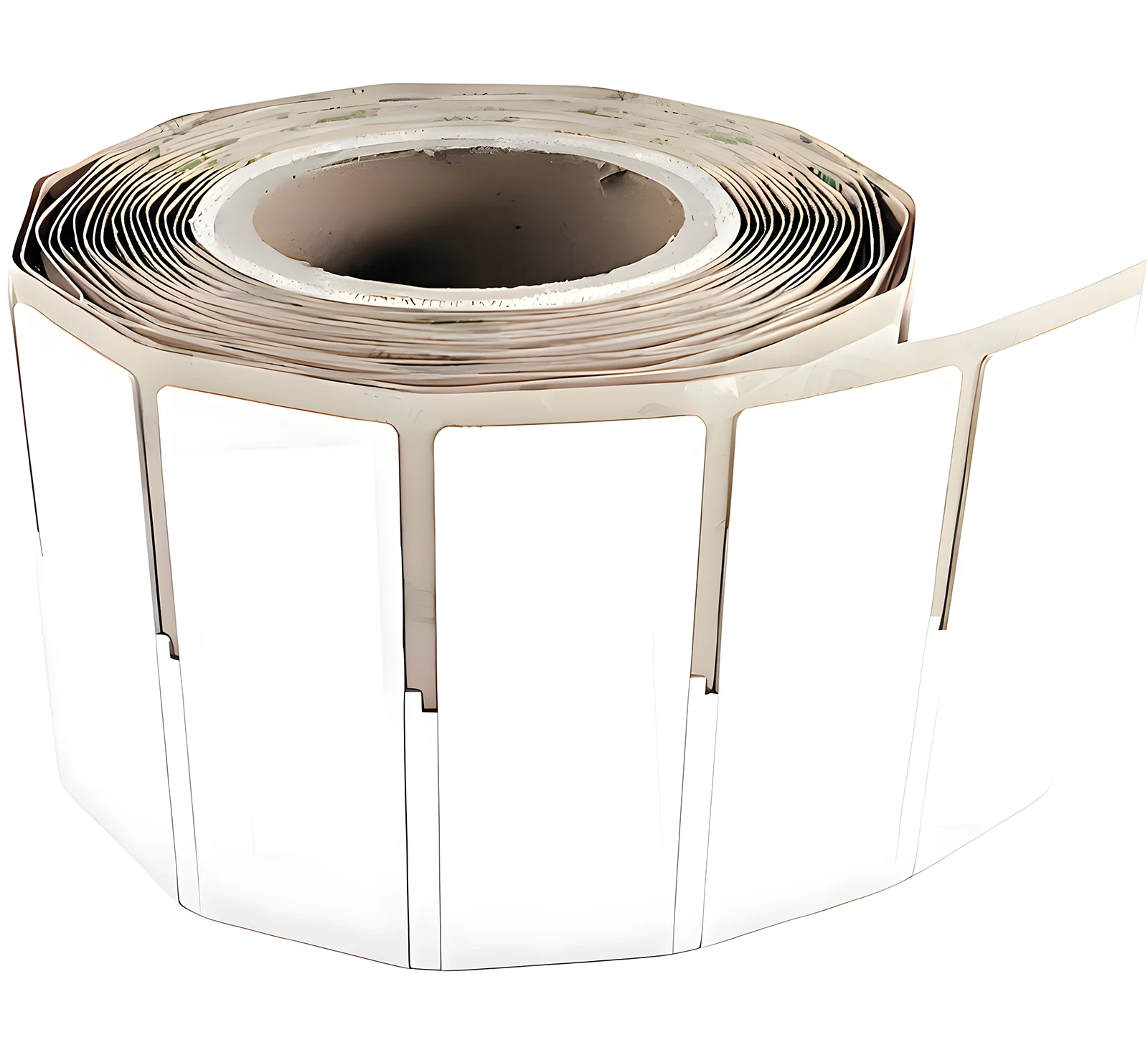
The photo shows the stickers on a roll — one Tag-U8-10040 is a single sticker.
Table of contents
Specifications
- Colour: white
- Material: PET
- Operating frequency: 860–960 MHz
- Reading distance: up to 6.4 m (handheld reader), up to 7 m (fixed reader)
- IC type: NXP UCODE 8
- Memory: EPC 128 bit, TID 96 bit
- Write cycles: 100,000
- Data retention: up to 50 years
- Dimensions: 100 × 40 × 1.2 mm
- Weight: 2.5 g
- Operating temperature: −20°C – +85°C
- Storage temperature: −20°C – +85°C
- Protection rating: IP57
- Certificates: CE, RoHS
Kit contents
- Tag-U8-10040 UHF RFID sticker — 1 pc.
General instructions
Before using the RFID tags for the first time, read this manual carefully to make sure they have been installed and configured correctly.
RFID tag usage rules
RFID stickers are thin, flexible RFID tags that can be attached to various objects, such as devices, documents or products, to make them trackable. The actual reading range of the Tag-U8-10040 depends on the reader, the antenna and the material of the tagged surface.
Protection against damage
- RFID tags are passive devices and need no power supply. Protect them against mechanical damage to keep them reliable.
- Use specialised tags as intended and in suitable conditions to ensure they work correctly.
Protection against interference
- Electromagnetic interference: RFID tags can be susceptible to electromagnetic interference, so do not store or use them near strong sources of interference, such as electronic devices that generate strong electromagnetic fields.
- Reading data: to ensure optimal reading, store the tags so that nothing blocks the radio signal — for example, do not store them in metal containers that can interfere with the signal.
Maintenance and cleaning
Store and operate specialised tags in line with the manufacturer's recommendations for use in harsh conditions.
Storage
- If the RFID tags will not be used for a long time, store them in a dry, cool place, away from strong electromagnetic fields.
- Avoid storing the tags in places with extreme temperatures or humidity, or where they may be mechanically damaged, e.g. crushed.
Following these rules helps keep RFID tags safe to use and increases their durability and reliability.
Frequently asked questions
What is the difference between UHF RFID and HF RFID stickers?
Can I read multiple Tag-U8-10040 stickers at the same time?
Are these stickers compatible with all UHF RFID readers?
Downloads
The manuals and datasheets as PDF, in case an offline copy is needed. Everything in them is also on this page.